


iSolution Logistics offers multimodal transport and customs brokerage as one connected service. One team plans the route across road, rail, sea and air. The same team prepares the customs declaration, delivers to the destination and tracks every shipment. As a result, you deal with one point of contact instead of several providers.
IN THIS PAGE
Multimodal Transport Across Road, Rail, Sea and Air
A multimodal transport service moves cargo using two or more transport modes, such as road, rail, sea and air. It runs under a single contract and a single point of responsibility. According to the UNCTAD/ICC Rules for Multimodal Transport Documents, a Multimodal Transport Operator takes responsibility for the entire shipment across every mode used. It does not hand liability off at each transfer point.
- Mode Integration: optimizing the transportation process by combining road, rail, sea and air transport.
- Schedule Synchronization: synchronizing schedules and managing goods during the transfer from one mode to another.
- Cargo Protection: ensuring the safety and protection of goods throughout the transportation process.
Combining modes lets you match each leg to the transport type best suited for it. Rail or sea suits long-distance, lower-cost movement. Road suits flexible last-mile delivery. A single coordinated contract also reduces the paperwork and handover risk of booking each leg separately.
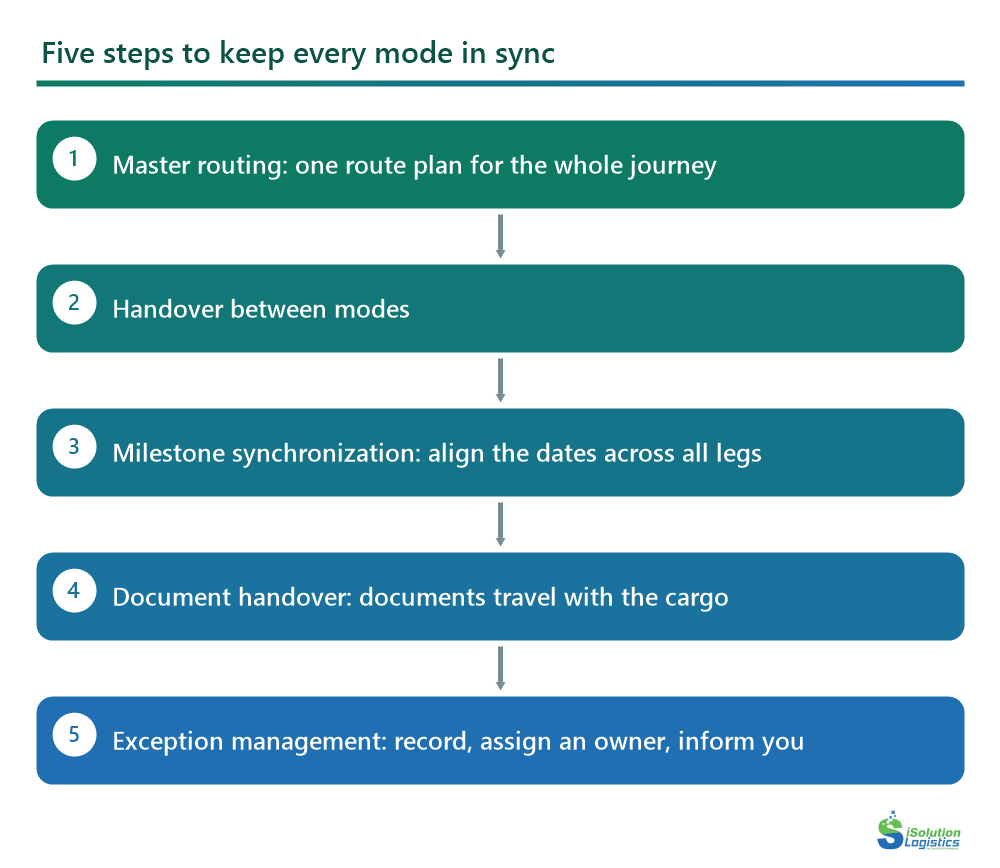
The risk sits at the handovers between modes, so we control them in five steps.
Read the five steps as text
- Master routing: we set one route plan for the whole journey.
- Handover between modes: we manage the change from one mode to the next.
- Milestone synchronization: we align the dates across all legs.
- Document handover: we pass the documents on with the cargo.
- Exception management: we record any deviation, assign an owner and inform you.
When cargo crosses borders, declarations and seals need extra care. See our cross-border transport page for road routes to Laos and Cambodia.
Door to Door Delivery and Distribution
A door to door service delivers cargo from the shipper’s origin point to the consignee’s destination. You do not need to arrange separate pickup or final-mile transport. One point of contact manages the shipment from start to finish. This reduces handover delays and makes a shipment easier to trace if a problem comes up.
- End-to-End Coordination: managing the entire transportation process, including scheduling and tracking.
- Origin-to-Destination Transport: carrying goods from the point of origin to the final destination, including loading, unloading and delivery.
- Packing and Delivery Management: managing the packing, transportation and delivery of goods.
- Schedule and Route Management: planning schedules and routes so goods arrive on time and as agreed.
- Shipment Visibility: giving you tracking information so you can monitor the shipment.
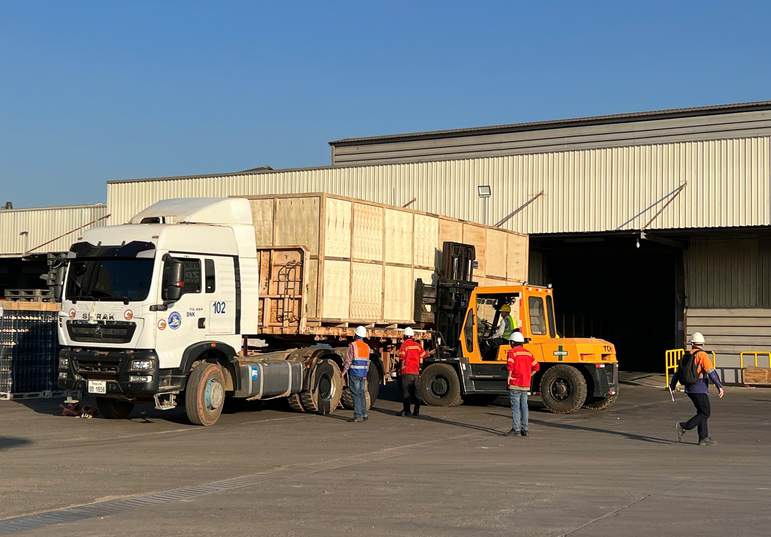
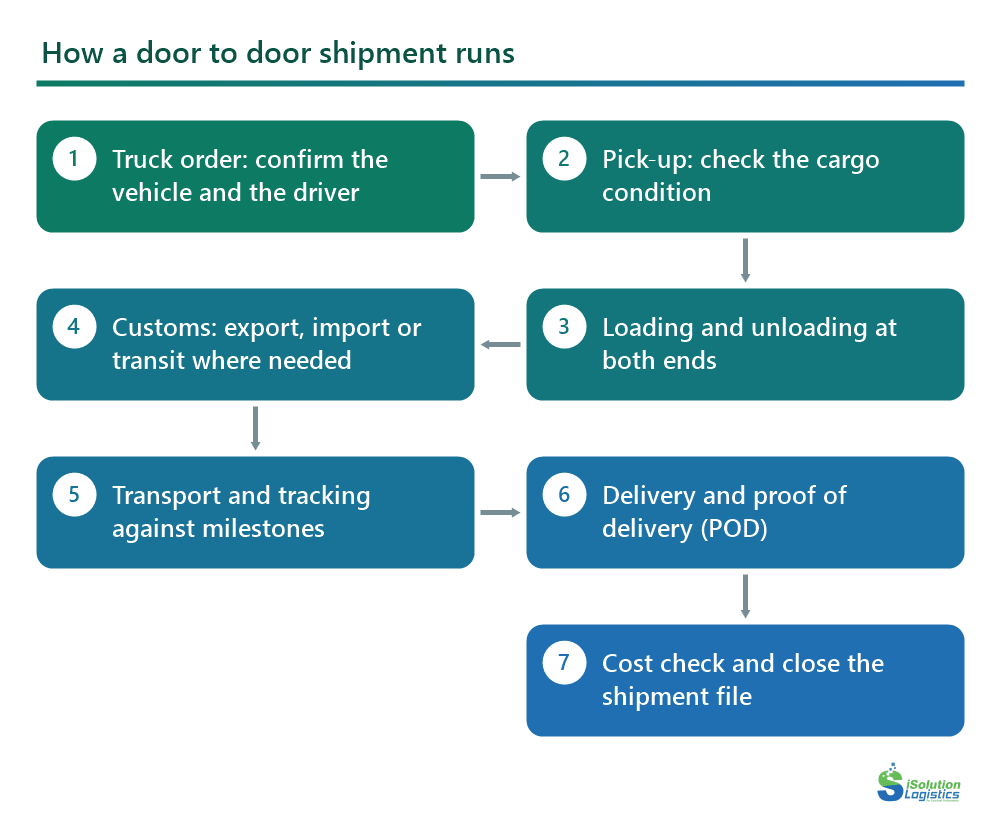
Poor route and schedule planning is one of the most common causes of late deliveries and unnecessary handling costs. So we plan routes and schedules in advance, instead of reacting shipment by shipment. Each door to door shipment then runs in seven stages.
Read the seven stages as text
- Truck order: we confirm the vehicle and the driver.
- Pick-up: we check the cargo condition when we collect it.
- Loading and unloading: we coordinate both ends of the trip.
- Customs: we coordinate the export, import or transit procedures where they apply.
- Transport and tracking: we follow the shipment against milestones and update the estimated dates.
- Delivery: we deliver to the consignee and collect the proof of delivery (POD).
- Cost check: we reconcile the costs and close the shipment file.
Customs Brokerage and Clearance
Customs brokerage and clearance covers the registration, declaration and duty payment steps a shipment must complete before authorities release it. The World Customs Organization’s SAFE Framework of Standards sets out the security and compliance procedures customs authorities use worldwide.
- Customs Consultation: support and consultation throughout the customs and clearance procedures for goods.
- Customs Procedure Handling: handling registration, declaration and payment of customs duties and fees.
Avoiding Border Delays
Errors in a customs declaration are one of the most common causes of delay at the border. Examples are an incorrect tariff classification or missing paperwork. So we prepare and check the paperwork before the shipment departs, not after it arrives.
Duty rates, required certificates and inspection rules vary by product category and destination country. A shipment with several product types may need several declarations at once. Reviewing these requirements before departure keeps a shipment from being held up while paperwork is corrected.
Who Clears the Goods?
Your sales contract decides who handles each customs step. Under most Incoterms 2020 rules, the seller clears the goods for export and the buyer clears them for import. Our articles on EXW and FCA and CPT and CIP explain the differences.
Customs Procedures for Transit Cargo
Transit cargo needs extra controls. Our process covers the transit declaration and customs controls. It also covers sealing and vehicle checks where they apply. Next come border crossing, in-transit tracking and confirmation of exit or arrival. For Vietnamese customs rules, visit the General Department of Vietnam Customs.
Why Combine Multimodal Transport and Customs Brokerage?
Multimodal transport and customs brokerage work best together. When cargo crosses several modes or borders, declarations and seals need care. So one team plans the route and prepares the declaration together.
A single contract reduces handover risk between legs. Checking the paperwork before departure reduces delays at the border. One point of contact also means you hear about any exception from the same team that manages the shipment.
What We Need to Quote Your Shipment
An accurate quote needs complete information. Please send the following before we quote or file a declaration.
| Group | What to provide |
|---|---|
| Goods | Product name and description, HS code, quantity, weight, packaging, volume in CBM and cargo value |
| Carriage | Incoterms, mode, route, port of loading and destination, and the pick-up and delivery addresses |
| Timing | Cargo ready date, expected departure and arrival, and any deadline |
| Customs | Export, import or transit, the declaration type, and the border gate or port |
| Extra services | Certificate of origin (C/O), insurance and specialist inspection |
| Parties | Shipper, consignee, notify party and any authorized agent |
Without these details, an accurate quote is not possible. So we check this list first.
Tracking and Exceptions
We follow every multimodal transport and customs brokerage shipment against milestones and update the estimated dates. If the schedule, customs status, documents or cargo condition change, we record the deviation and name an owner. Then we update you.
Choosing Trade Terms
Your Incoterms decide where the seller’s duty ends and who clears the goods at each border. So tell us your terms and both addresses before we quote. Some Incoterms 2020 rules suit any mode of transport. For example, CPT and CIP work for multimodal carriage. Read the official rules on the ICC website.
Frequently Asked Questions
What does your multimodal transport and customs brokerage service include? It includes multimodal transport, door to door delivery and distribution, and customs brokerage and clearance.
What is a multimodal transport service? It moves cargo by two or more modes under a single contract and a single point of responsibility.
Do you handle customs declarations? Yes. Our team supports consultation and handles registration, declaration and payment of customs duties and fees.
What do you need to quote a shipment? The goods, the carriage, the timing, the customs type, any extra services and the parties. See the table above.
Who clears the goods at export and import? Your sales contract decides. Under most Incoterms 2020 rules, the seller clears export and the buyer clears import.
Related Reading
- Cross-Border Transport & Transit Cargo
- EXW and FCA Incoterms 2020: Who Pays and Who’s Responsible at Each Stage
- CPT and CIP Incoterms 2020: Who Pays and Who’s Responsible at Each Stage
- Cargo Seals Explained: Temporary Seals vs Official Carrier Seals in Container Shipping
Contact ISOLUTION LOGISTICS for a transportation solution tailored to your shipment requirements.
Contact us directly via WhatsApp, Zalo, or Facebook Messenger for immediate assistance